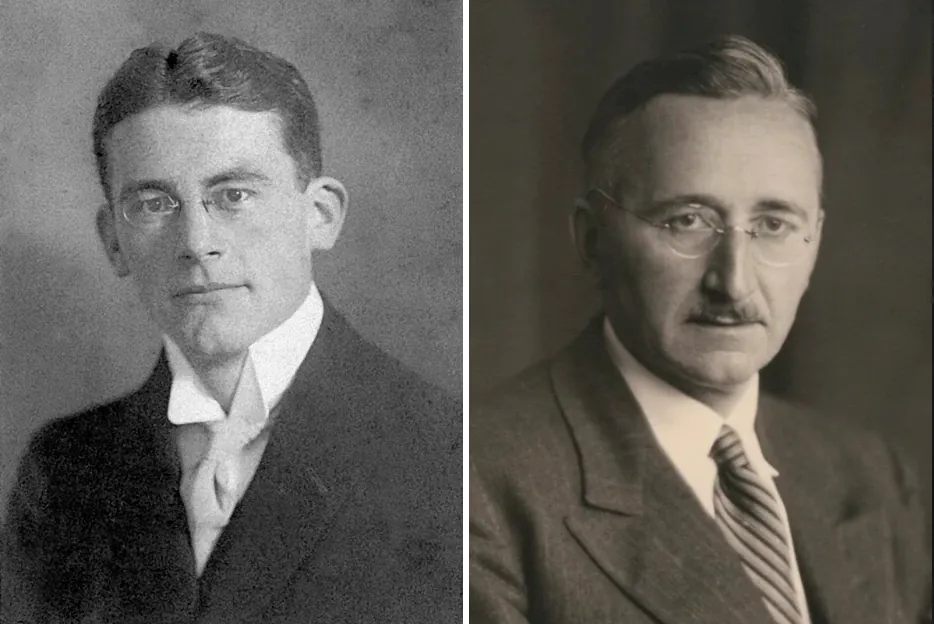
What did F. A. Hayek learn from the man he referred to as “Hitler’s chief legal apologist”? My new working paper on Hayek and Carl Schmitt is out now in […]
Heute Abend 19.00 Uhr im Live-Stream: “Einfache Wahrheiten zählen”. Buchvorstellung mit @Lars_Feld und Christian Molitor. Der Band ist eine Auswahl von Veröffentlichungen von Olaf Sievert, dessen Laufbahn eng dem @SVR_Wirtschaft […]
WP: Hayek and Schmitt on the “Depoliticization” of the Economy, by Daniel Nientiedt https://t.co/ANZNQjO86Y pic.twitter.com/5fxeRDPH9X
Im dritten Zukunftsgespräch unterhalten sich @Lars_Feld und @ThePioneerDe Chefredakteur @MichaelBroecker darüber, wie sich Europa aufstellen muss, um in der globalen Wirtschaft und im Systemwettbewerb mit China künftig bestehen zu können.https://t.co/1S0C7D3qVe
Am 27. Januar stellen @Lars_Feld und Christian Molitor bei der Buchhandlung zum Wetzstein in Freiburg ihren Band “Einfache Wahrheiten zählen. Beratung mit ordnungspolitischem Anspruch” mit den gesammelten Schriften von Olaf […]
In der ersten Ausgabe ihres @ThePioneerDe -Podcasts in diesem Jahr blicken @Lars_Feld und @haucap auf die dringendsten Themen der🚦-Koalition. Für @Lars_Feld ist klar: “Wenn diese Bundesregierung noch was erreichen will, […]
In ihrem @ThePioneerDe Ökonomie-Briefing begeben sich @Lars_Feld und @haucap diese Woche auf einen finanz- und wirtschaftspolitischen Ausritt durch die deutsche Wirtschaft, den italienischen Haushalt und die französischen Führungsansprüche 🐎https://t.co/kaDrhkkxA1
Wir wünschen Ihnen und Ihren Familien friedliche und erholsame Weihnachten und uns allen ein gesundes und erfolgreiches Jahr 2023🎄Lars P. Feld und das Team des Walter Eucken Instituts@Lars_Feld @mkasper_ @dnientiedt […]
Im BZ-Talk @badischezeitung mit Bernd Kramer spricht @Lars_Feld über die Strom- und Gaspreisbremsen und darüber, wie er die Wirtschaftspolitik der Ampel-Koalition bewertet.https://t.co/ky0wasswpS pic.twitter.com/vtRXg6ifmX
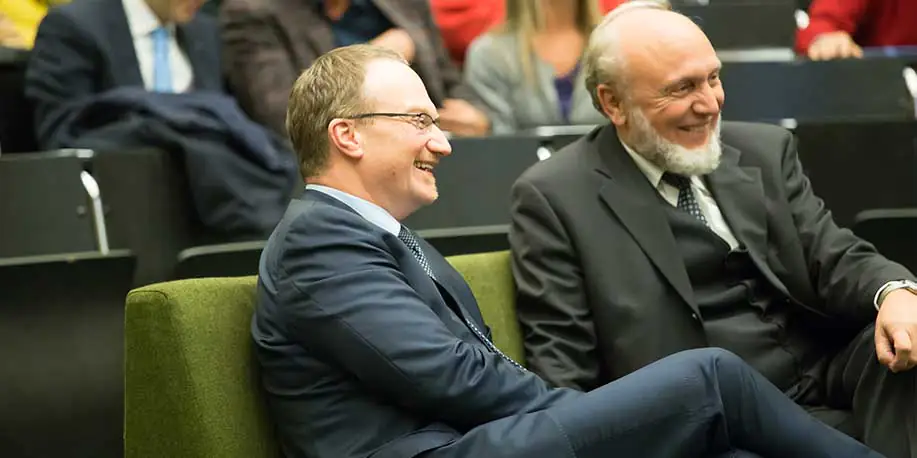
Das IWP aus Luzern hat in seiner neuen Reihe “Das Netz fragt” eine Reihe von Fragen aus Onlineplattformen gesammelt und sie @HansWernerSinn und @Lars_Feld vorgelegt. Die beiden Ökonomen diskutieren u.a. […]
Das Walter Eucken Institut sucht eine/n Forschungsgruppenleiter für den Bereich Wirtschaftspolitik/Finanzwissenschaften. Wir freuen uns über Ihre Bewerbung. Informationen finden Sie hierhttps://t.co/c8dChCRD0M@Lars_Feld @mkasper_ @dnientiedt @we_philipp pic.twitter.com/Yj14nv5jcH
@haucap und ich befassen uns im Jahresend-Podcast von @ThePioneerDe mit den wichtigsten Entscheidungen der abgelaufenen Woche: Zins-Entscheid und QT der EZB sowie die Energie”preis”bremsen. Haucaps Milde lässt in der Nachspielzeit […]
Für @Lars_Feld @WielandVolker und Christoph M. Schmidt ist “Angebotsorientierte Finanzpolitik [das] Gebot der Stunde”, um der beklagenswerten Phase aus niedrigem Wachstum und hoher Inflation zu begegnen, in der die deutsche […]
In der letzten Ausgabe des @ThePioneerDe Ökonomie-Briefings im Jahr 2022 bewerten @Lars_Feld und @haucap den jüngsten Zinsentscheid der EZB (0,5% zu wenig) und blicken final auf die Energiepreisbremse (Kritik ja, […]
No entries were found.